
Written by Hanana, with photo notes from Hanakiki
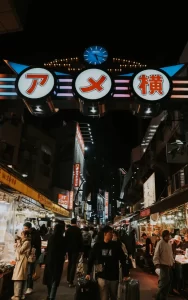
Hi, I’m Hanana! Sumiyoshi Taisha is one of the oldest shrines in Japan and the most popular hatsumode spot in Osaka. More than 2 million people visit at the start of each year. Locals call it “Sumiyossan” with affection. It’s a short tram ride from the city center, and the road to the shrine fills with food stalls in early January.
At a glance
- Where: Sumiyoshi Taisha, Sumiyoshi Ward, Osaka
- When: January 1–3 is the busiest; New Year events continue through mid-January
- Access: 3 minutes on foot from Sumiyoshitaisha Station (Nankai Main Line), or right next to Sumiyoshi-toriimae Station on the Hankai tram line
What to eat & try
Yatai (food stalls)
At New Year’s, the streets around the shrine are lined with yatai. Walking from stall to stall is a big part of the fun. Look for:
- Takoyaki and ikayaki: Osaka favorites. Ikayaki at Osaka festivals is often a flat, chewy pancake of squid and egg.
- Grilled corn and yakisoba: Classic festival food cooked right in front of you.
- Baby castella: Little sponge cakes baked in fun shapes, often sold warm in bags.
- Amazake: A warm, sweet rice drink. The kind made from rice koji is alcohol-free, but the kind made from sake lees can contain a little alcohol, so ask if you need to avoid it.
Things to try
- Ride the Hankai tram: Osaka’s last streetcar line runs to the front of the shrine. It’s a charming way to arrive.
- Watch a New Year ritual: The shrine holds traditional ceremonies in early January, including a dance ritual on January 4 and a white horse ritual on January 7.
What to see
Sorihashi (the arched bridge)
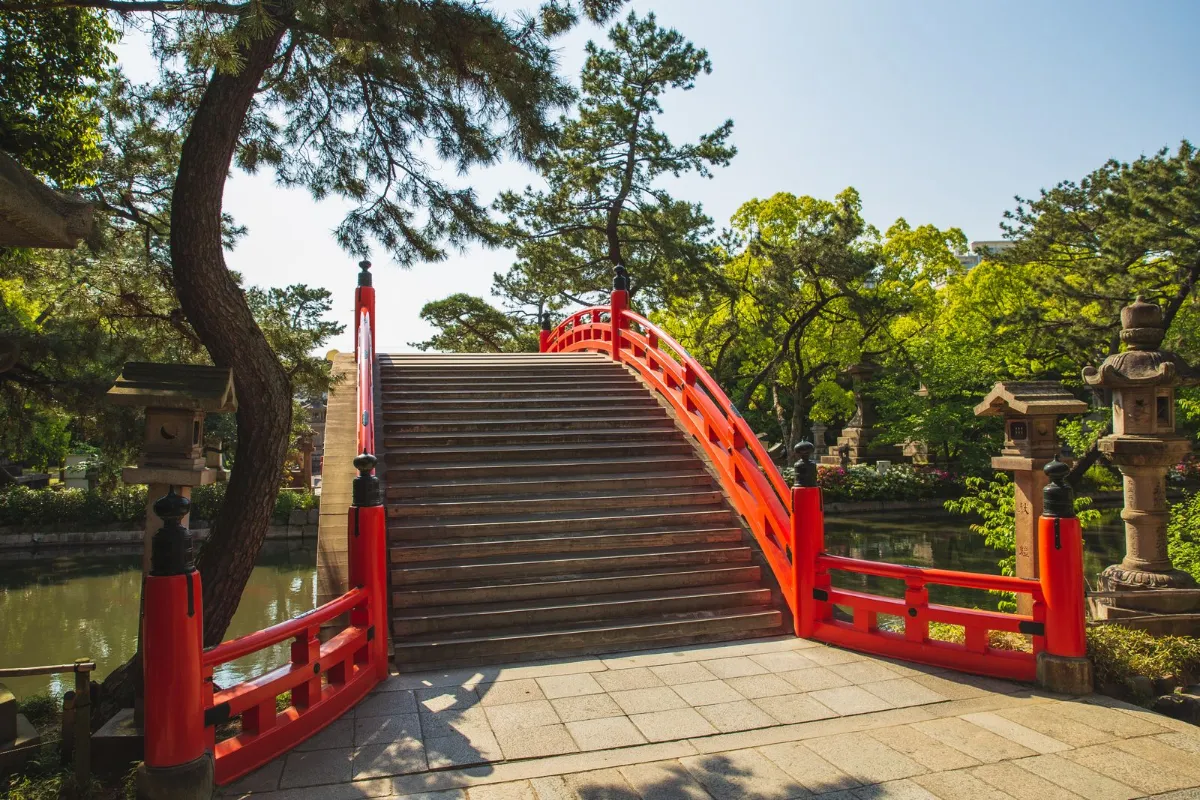
At the entrance, a red bridge rises in a steep arch over a pond. Crossing it is said to purify you before you visit the gods. Hold the rail; it’s steeper than it looks!
A unique ancient architecture
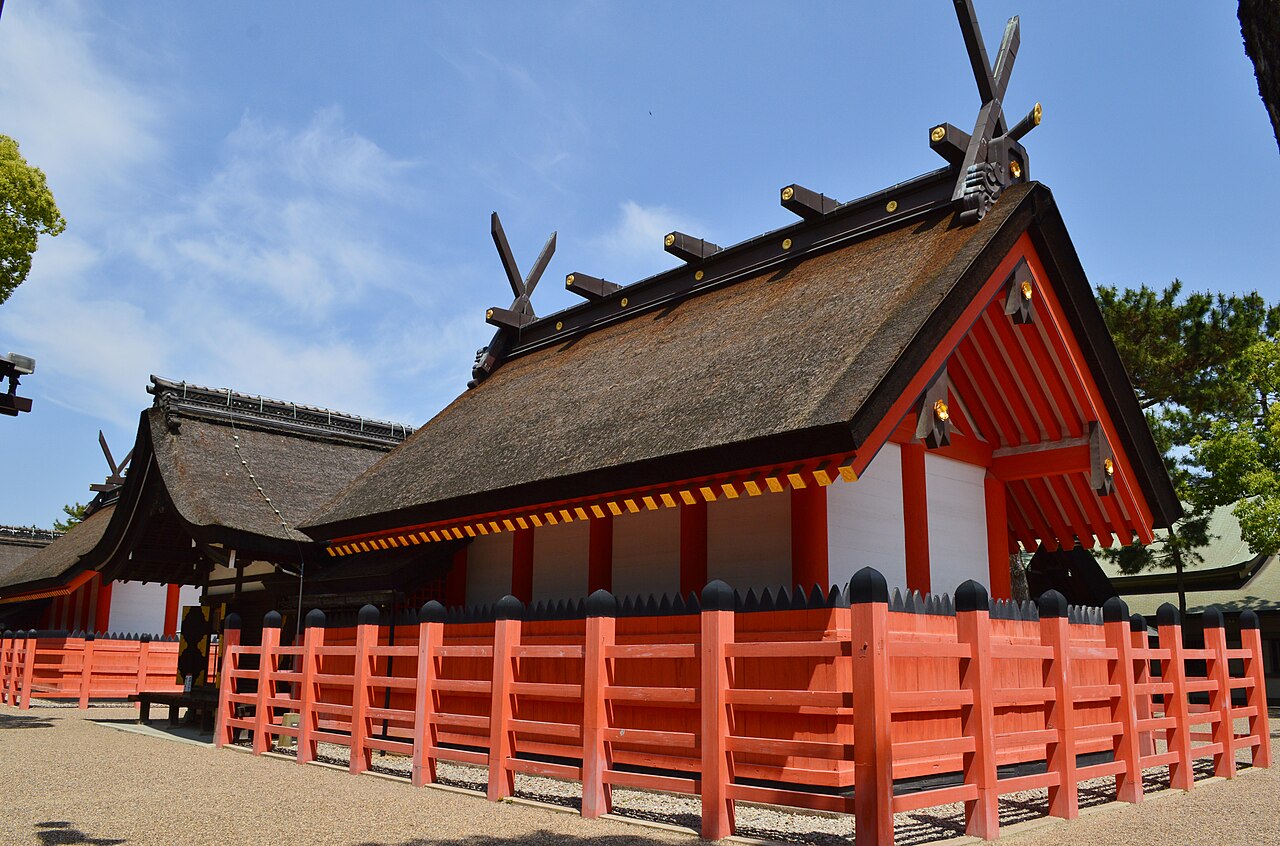
The main halls are built in the Sumiyoshi-zukuri style, one of the oldest styles of shrine architecture in Japan, and they are designated National Treasures. Their straight roofs and simple lines look very different from later shrines.
Hanakiki’s photo spot
Hanakiki’s camera note: Shoot the Sorihashi bridge from the side of the pond, not from the bridge itself. The arch and its reflection make an almost perfect circle on a calm day. In the New Year crowds, a slightly higher angle (camera above your head) helps.
Event info
Main New Year events (based on the shrine’s annual event calendar):
| Date | Event |
|---|---|
| January 1, early morning (before sunrise) | Wakamizu ritual and New Year’s Day ceremony (Saitansai) |
| January 4 | Toka Shinji (traditional dance ritual) |
| January 7 | Aouma Shinji (white horse ritual) |
| January 9–10 | Ebessan festival at a shrine within the grounds (crowded) |
| January 15 | Tondo (burning of old charms) |
- Opening hours during the New Year period differ from usual. Check with the shrine.
- Roads around the shrine are closed to cars on New Year’s Eve night, January 1, and parts of January 2–3. The shrine’s parking lot is closed from December 31 to January 3.
Official website: Sumiyoshi Taisha: https://www.sumiyoshitaisha.net/
Please check the official website for the latest information before you go.
Travel tips
- Use the train or tram: Driving is not an option at New Year’s.
- Peak times: Midnight on January 1 and late mornings on January 1–3 are the most crowded.
- Bring coins: Small coins are handy for offerings and stalls.
- Return your old charms: If you have last year’s omamori, you can return them to the shrine to be burned respectfully.
Book your trip
- Getting there: Nankai Main Line from Namba Station to Sumiyoshitaisha Station
- Getting there: JR Central (Tokaido Shinkansen between Tokyo, Kyoto, and Osaka): https://global.jr-central.co.jp/en/
- Getting there: JR West (trains in western Japan, including Osaka): https://www.westjr.co.jp/global/en/
- Plan your trip: Japan National Tourism Organization: https://www.japan.travel/en/

コメント