
Written by Hanana, with photo notes from Hanakiki
Hi, I’m Hanana! You’ve probably seen photos of Fushimi Inari Taisha: thousands of bright orange torii gates winding up a mountain. At New Year’s, it is one of the busiest shrines in western Japan, with millions of visitors in the first three days of January. And the food here has a fun connection to the shrine’s messenger, the fox.
At a glance
- Where: Fushimi Inari Taisha, Fushimi Ward, Kyoto
- When: January 1–3 is the New Year’s peak; the shrine grounds can be visited all year
- Access: Right in front of JR Inari Station (about 5 minutes from Kyoto Station), or a 5-minute walk from Keihan Fushimi-Inari Station
What to eat & try
Inari sushi
Inari sushi is sushi rice tucked inside a pouch of sweet, seasoned fried tofu. At Fushimi Inari, the fox is the messenger of the god Inari, and fried tofu is said to be the fox’s favorite food. That’s how the dish got its name. Some shops near the shrine shape them like fox ears!
Kitsune udon
Kitsune means fox. Kitsune udon is a bowl of thick wheat noodles in a light, hot broth, topped with a big piece of sweet fried tofu. It’s a warm, comforting meal on a cold January day.
Things to try
- Look for foxes everywhere: Stone fox statues guard the shrine. Many hold a key, a jewel, or a scroll in their mouths. How many can you find?
- Fox-shaped ema: Instead of the usual wooden plaque, Fushimi Inari’s ema are shaped like a fox face. Visitors draw their own fox expressions and write a wish on the back.
- Try the “omokaru” stone: At Okusha, make a wish and lift a stone lantern’s top stone. If it feels lighter than you expected, your wish is said to come true.
What to see
Senbon Torii (Thousand Torii Gates)
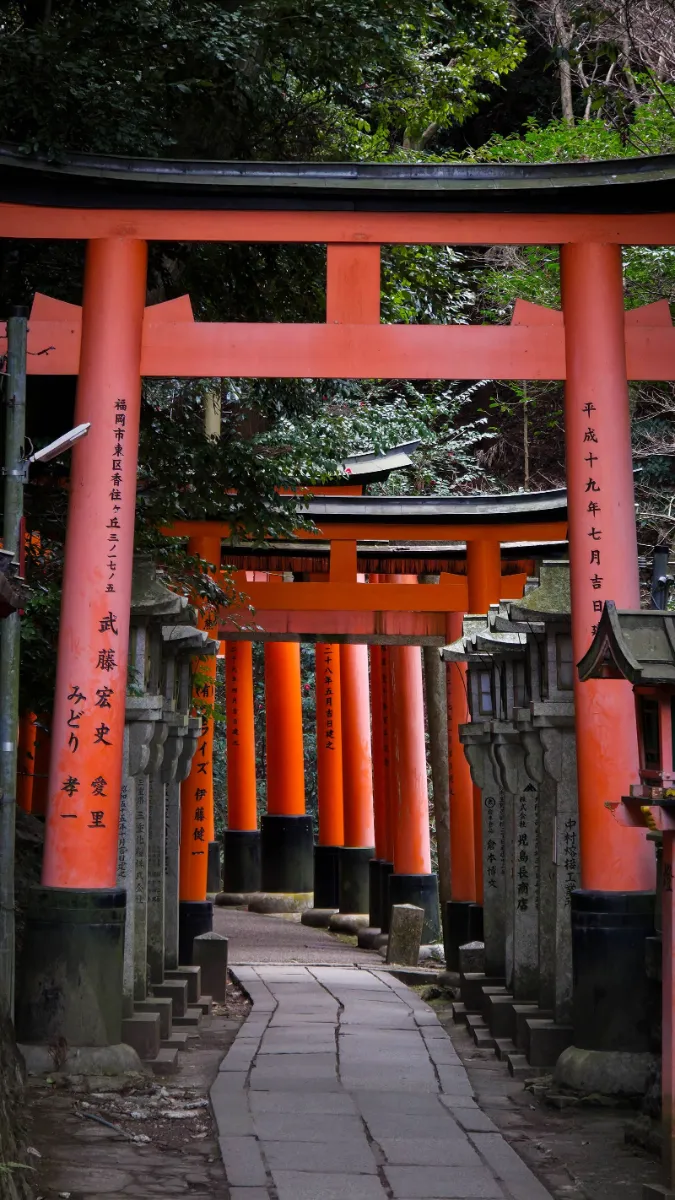
Behind the main buildings, two rows of orange torii gates stand close together, forming tunnels. The gates are donated by people and companies as a thank-you for wishes granted. Thousands of torii continue along the trails to the top of Mount Inari.
The main shrine and the tower gate
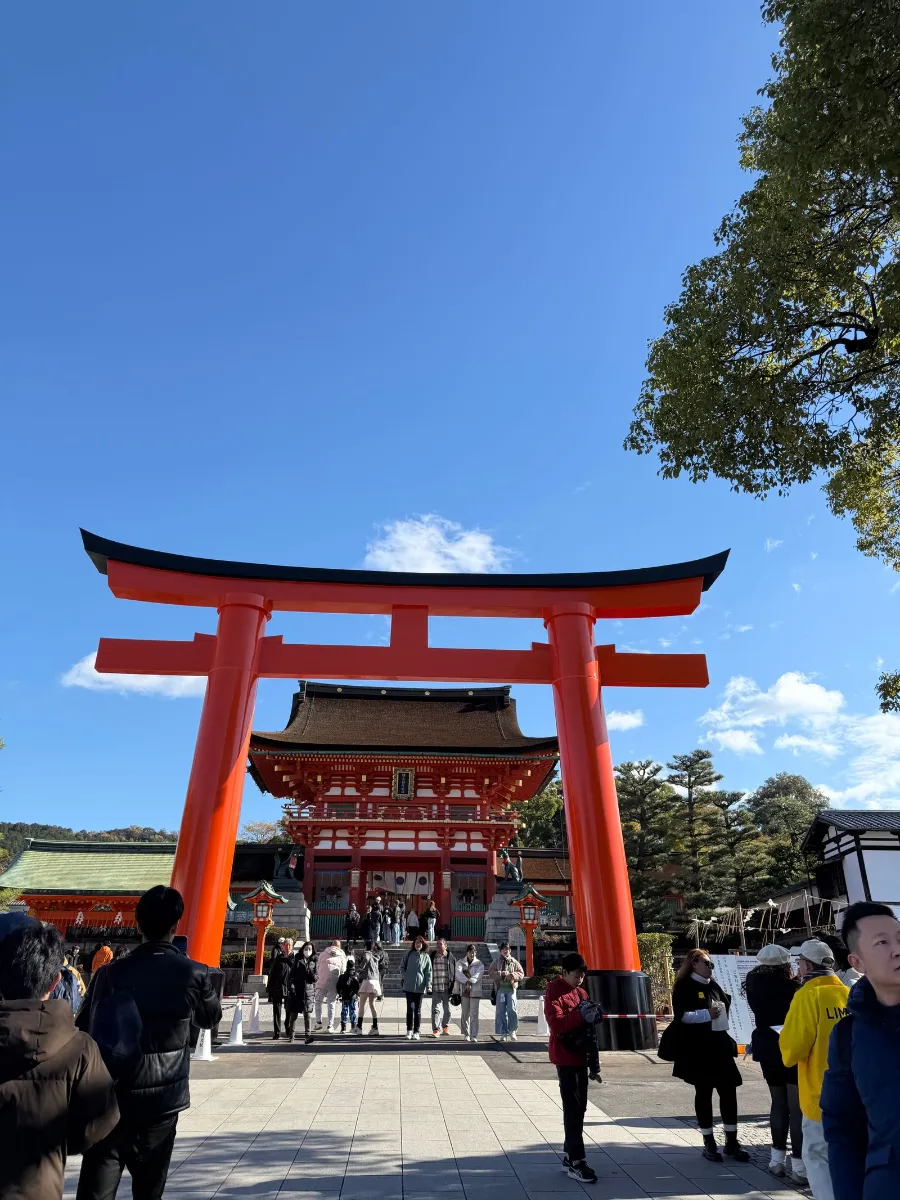
The shrine has a history of more than 1,300 years and is the head shrine of about 30,000 Inari shrines across Japan. Its large orange tower gate (romon) at the entrance is a symbol of the shrine.
Hanakiki’s photo spot
Hanakiki’s camera note: Most people stop at the first tunnel of torii. Keep walking about 30–45 minutes up the mountain to the Yotsutsuji intersection. The crowds thin out, and you get a wide view over Kyoto. In the early morning, the light through the gates is beautiful.
Event info
- The shrine says more than 2.5 million people usually visit during the first three days of January.
- The shrine’s parking lot is closed from December 30 to January 6. Please use the train.
- New Year’s hours and traffic controls are announced in December.
Official website: Fushimi Inari Taisha: https://inari.jp/
Please check the official website for the latest information before you go.
Travel tips
- Take the train: JR Inari Station is just in front of the shrine. Stations can be crowded at New Year’s, so allow extra time.
- Walking shoes: The full hike around Mount Inari takes about 2–3 hours with many stone steps.
- Visit early in the morning: Even outside New Year’s, it gets crowded from mid-morning.
- Respect the gates: Don’t hang on or lean against the torii, and make room for others in narrow tunnels.
Book your trip
- Getting there: JR West (trains in western Japan, including Kyoto): https://www.westjr.co.jp/global/en/
- Plan your trip: Japan National Tourism Organization: https://www.japan.travel/en/





コメント