
Written by Hanana, with photo notes from Hanakiki
Hi, I’m Hanana! In Japan, the first shrine visit of the year is called hatsumode. People line up to pray for health and happiness in the new year, buy lucky charms, and snack at food stalls. Meiji Jingu in Tokyo usually welcomes more hatsumode visitors than any other shrine in Japan. Let’s join the crowd!
At a glance
- Where: Meiji Jingu, Shibuya, Tokyo
- When: New Year’s Eve night to the first days of January (January 1–3 is the peak)
- Access: A short walk from JR Harajuku Station and Meiji-jingumae Station (Tokyo Metro)
What to eat & try
Toshikoshi soba on New Year’s Eve
On the night of December 31, Japanese families eat toshikoshi soba, which means “year-crossing noodles.” The long, thin buckwheat noodles are a wish for a long life, and because soba is easy to cut, they are also said to “cut away” the troubles of the past year. Many soba shops in Tokyo stay open late on New Year’s Eve.
Food stalls and amazake
Around big shrines at New Year’s, you will often find yatai (food stalls) selling grilled squid, yakisoba noodles, sweet chestnuts, and more. Another classic is amazake, a warm, sweet, and thick drink made from fermented rice. Amazake made from rice koji is alcohol-free, but the kind made from sake lees can contain a little alcohol, so ask if you need to avoid it. Holding a hot cup while you wait in line is a New Year’s tradition.
Things to try
- Draw an omikuji (fortune slip): Meiji Jingu’s omikuji is a little different from most shrines. Instead of good or bad luck, each slip has a short poem by Emperor Meiji or Empress Shoken with a message for your life, and an English version is available.
- Buy an omamori (charm): Little cloth charms for health, safety, study, or love make lovely souvenirs.
- Write an ema: Write your wish on a small wooden plaque and hang it at the shrine. At Meiji Jingu, many visitors write wishes in their own languages.
What to see
The giant torii gate and forest path
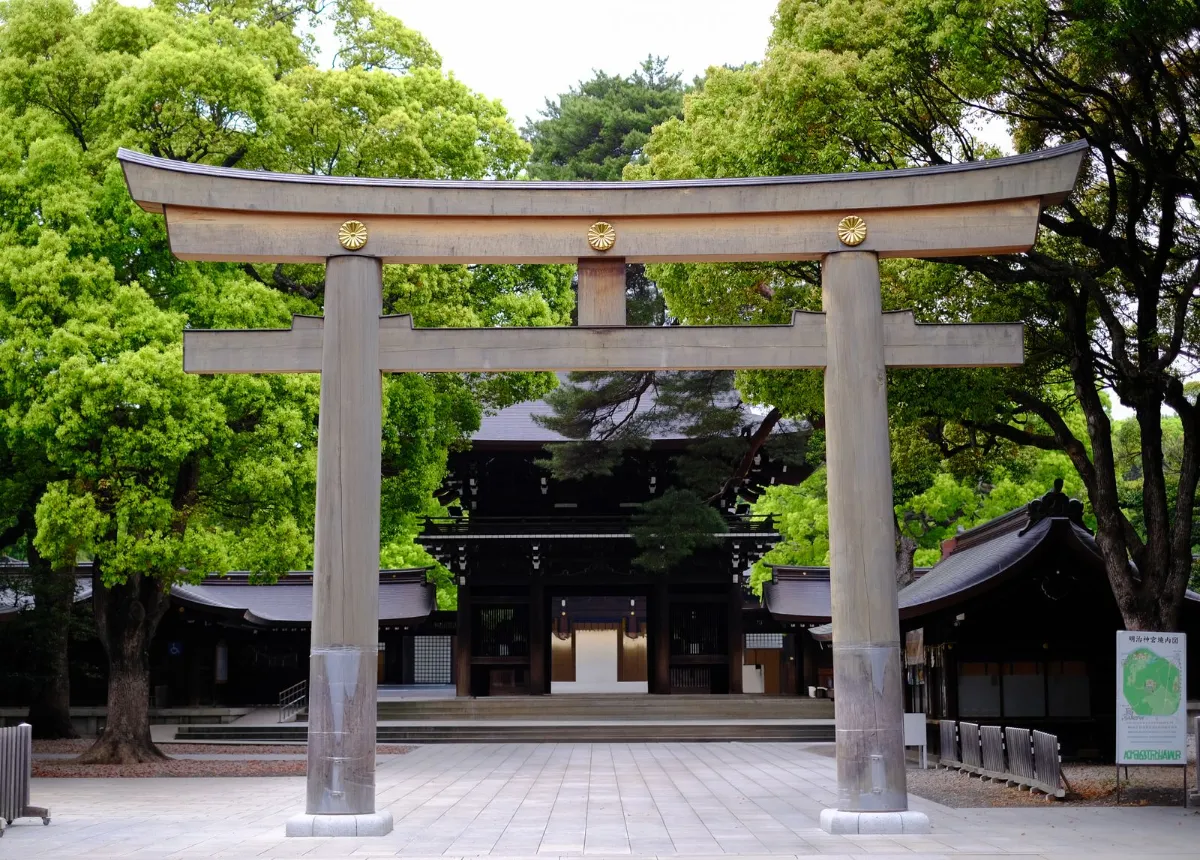
Meiji Jingu was built in 1920 to honor Emperor Meiji and Empress Shoken. The shrine sits in a large, quiet forest planted with about 100,000 trees donated from all over Japan. You enter through a huge wooden torii gate and walk along a wide gravel path to the main hall.
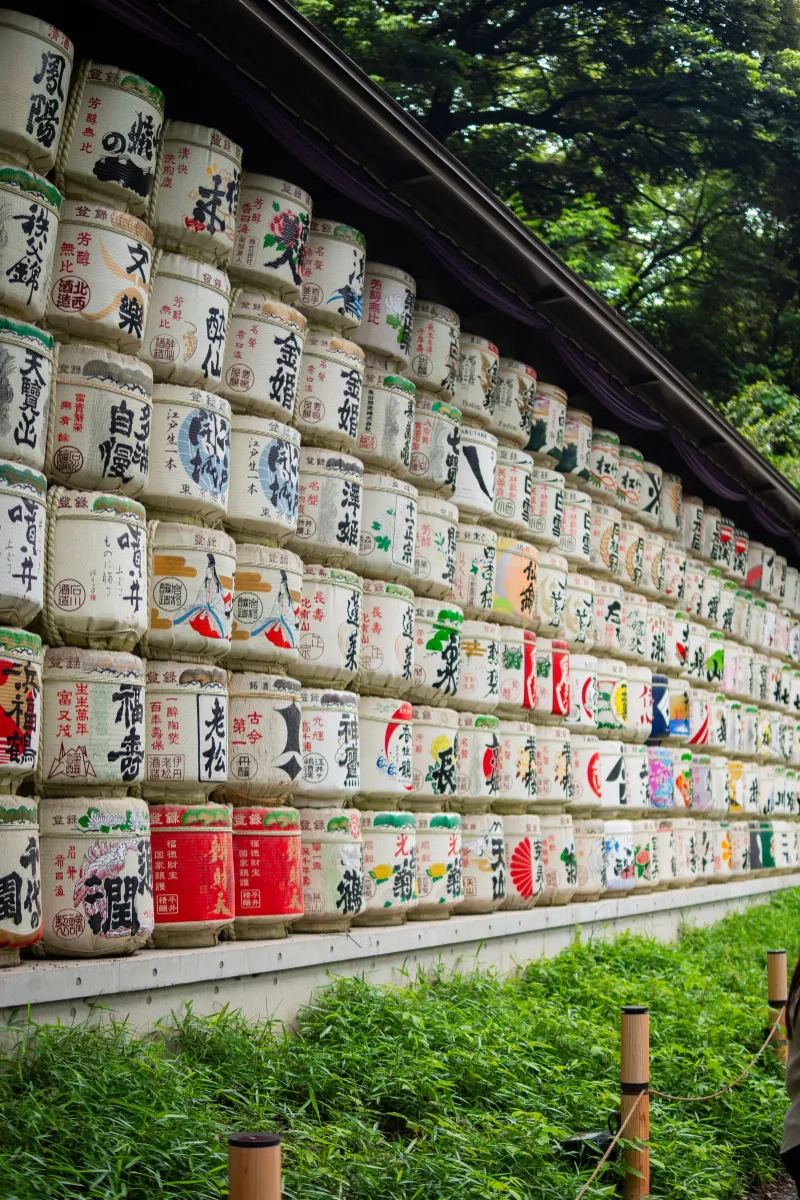
Sake barrels offered to the shrine
Along the path, you’ll see a colorful wall of sake barrels donated by brewers across Japan, and, across from it, a row of wine barrels from France. It’s a fun symbol of friendship between cultures.
Hanakiki’s photo spot
Hanakiki’s camera note: The sake barrel wall is the best photo spot, and it’s easy to shoot even in crowds because it’s beside the path. For a quiet forest shot, come back on a weekday in mid-January. Please don’t take photos in front of the main hall while people are praying.
Event info
- Meiji Jingu is usually open through the night from New Year’s Eve into January 1. Opening hours for the New Year period are announced on the official website in December.
- January 1–3 are extremely crowded, especially from just before midnight to the early hours of January 1, and from late morning to the afternoon.
Official website: Meiji Jingu: https://www.meijijingu.or.jp/
Please check the official website for the latest information before you go.
Travel tips
- How to pray at a shrine: Bow once before passing through the torii gate. At the water basin (temizuya), rinse your left hand, then your right hand, then your mouth (pour water into your hand; don’t touch the ladle to your lips), then your left hand again. At the main hall, gently drop a coin into the offering box, bow twice, clap twice, make your wish, and bow once more.
- Go after January 3: Many people still make their first visit up to around January 7, and visiting later in January is fine too. It’s much calmer.
- Expect lines and one-way routes: Police and staff guide the crowds. Follow their directions and be patient.
- Dress warmly: Waiting outside at midnight is cold. Bring gloves and a hat.
- Bring coins: Have some coins ready for the offering box and food stalls.
Book your trip
- Getting there: JR East (trains in eastern Japan, including Tokyo): https://www.jreast.co.jp/multi/en/
- Plan your trip: Japan National Tourism Organization: https://www.japan.travel/en/


コメント